Enjoolata Centre Maasai Mara
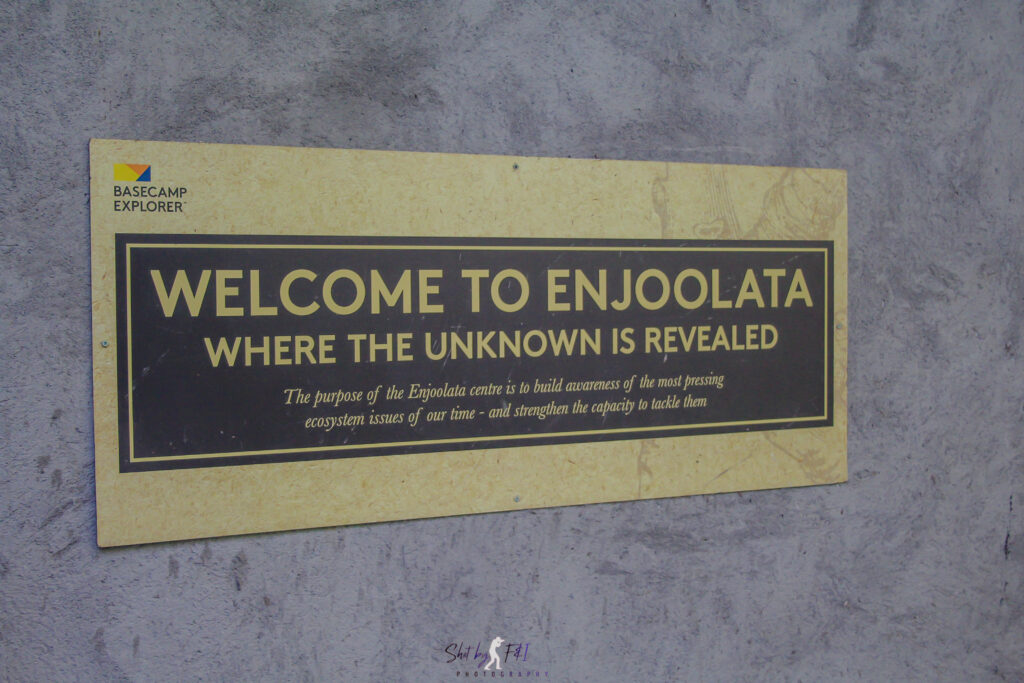
There is a moment that happens to almost everyone who visits the Maasai Mara, usually somewhere around their second or third game drive. You have seen the lions stretched out under an acacia tree. You have watched a herd of elephants amble across the plain in the gold light of late afternoon. You have, perhaps, witnessed the sheer chaos of a wildebeest crossing on the Mara River. And then, quietly, a different question begins to surface: who are the people who call this place home?
The Maasai Mara is, without question, one of the greatest wildlife theatres on Earth. But it is also home to one of Africa’s richest living cultures — a community whose relationship with this land predates the reserve itself by centuries, and whose knowledge, traditions, and resilience are every bit as extraordinary as the animals that draw visitors from every corner of the globe. Most safari itineraries skim past this. They show you the wildlife and leave the people as a blurred backdrop glimpsed through a vehicle window.
The Enjoolata Centre Maasai Mara exists to close that gap. Tucked into Basecamp Masai Mara on the banks of the Talek River, Enjoolata is a place where the Mara’s human story finally gets the spotlight — where you can sit with Maasai women as they bead jewellery passed down through generations, hear oral histories that have never been written in a book, and begin to understand a culture that has shaped this landscape as profoundly as the wildlife within it. If you are planning a Maasai Mara safari, this is the cultural counterpart to your game drive — and arguably just as unforgettable.
At Munzat Safaris, we believe this kind of experience should be built into your trip, not left to chance. That’s why we arrange for our clients to stay at this very eco-conscious property while on safari with us — placing you just steps from Enjoolata, with easy access to both the Maasai Mara National Reserve and the cultural immersion that makes a trip here unforgettable.
What is Enjoolata Centre?
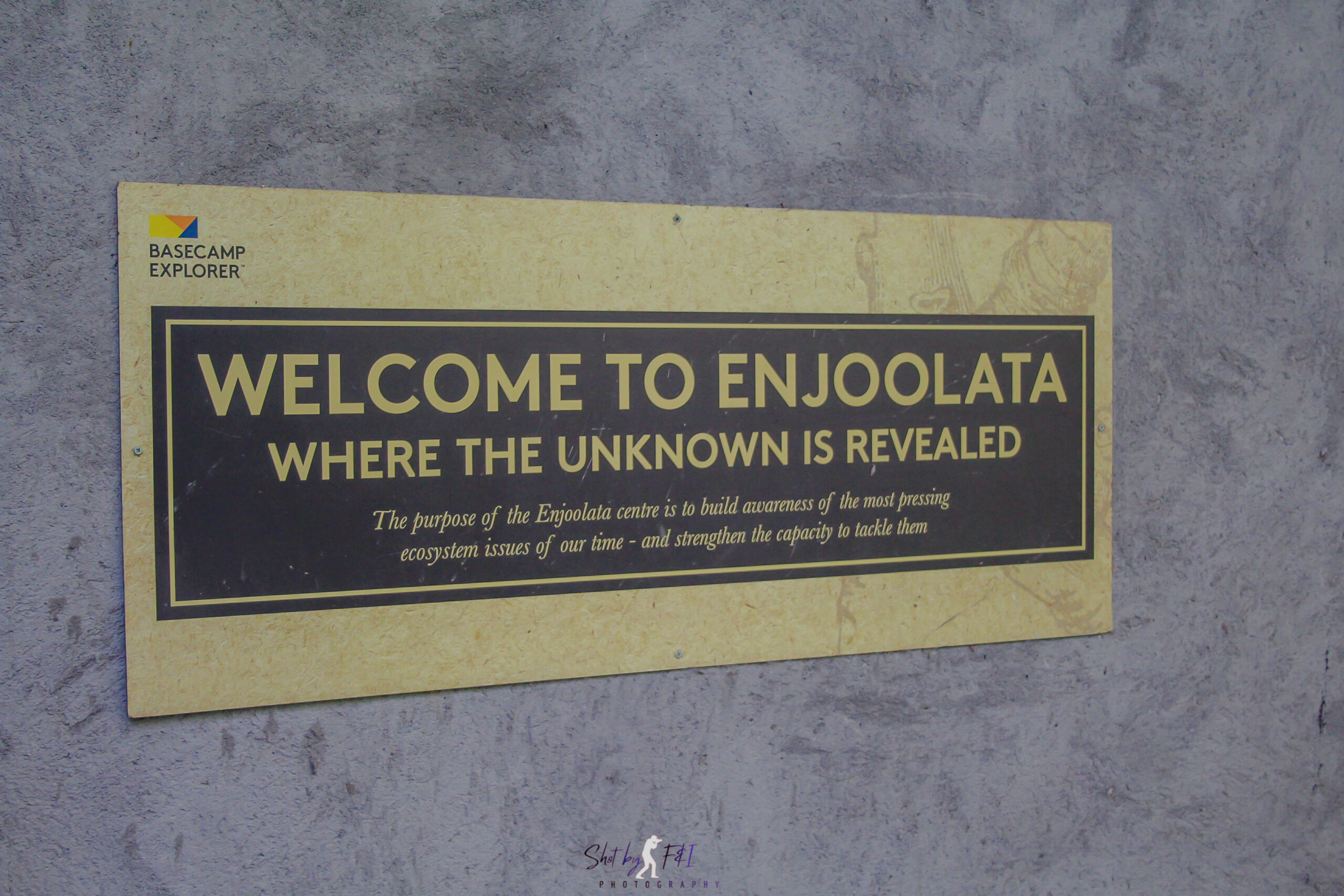
The Enjoolata Awareness and Training Centre is a cultural and conservation education hub established by Basecamp Explorer Kenya, situated within the grounds of Basecamp Masai Mara near Talek village. It opened to guests in late 2019, built on a simple but powerful idea: that the long-term survival of the Maasai Mara ecosystem depends as much on empowering and informing people as it does on protecting wildlife.
The centre was created as a meeting point — a literal and symbolic gathering space — for Maasai community members, conservancy partners, researchers, NGOs, tourists, and Basecamp’s own guests to come together around a shared interest in the Mara’s future. Its exhibition halls house tangible pieces of Maasai material culture: ceremonial headgear, shields, spears, beaded jewellery, and household tools, each one carrying generations of history. Alongside these are displays on the region’s birds, butterflies, and wildlife, helping visitors understand the Mara not as separate “nature” and “culture” but as one interconnected story.
Managed by the Basecamp Explorer Foundation — the non-profit arm of the Basecamp Explorer Group, which has operated sustainable tourism camps in the Mara for more than two decades — Enjoolata also houses the Basecamp Maasai Brand (BMB), a fair-trade-certified handicraft workshop where Maasai women artisans craft and sell beaded jewellery, leather goods, and accessories. Within Basecamp Maasai Mara, Enjoolata functions as the camp’s cultural heartbeat: where game drives reveal the wildlife of the Mara, Enjoolata reveals its people.
Where is Enjoolata Centre Located?
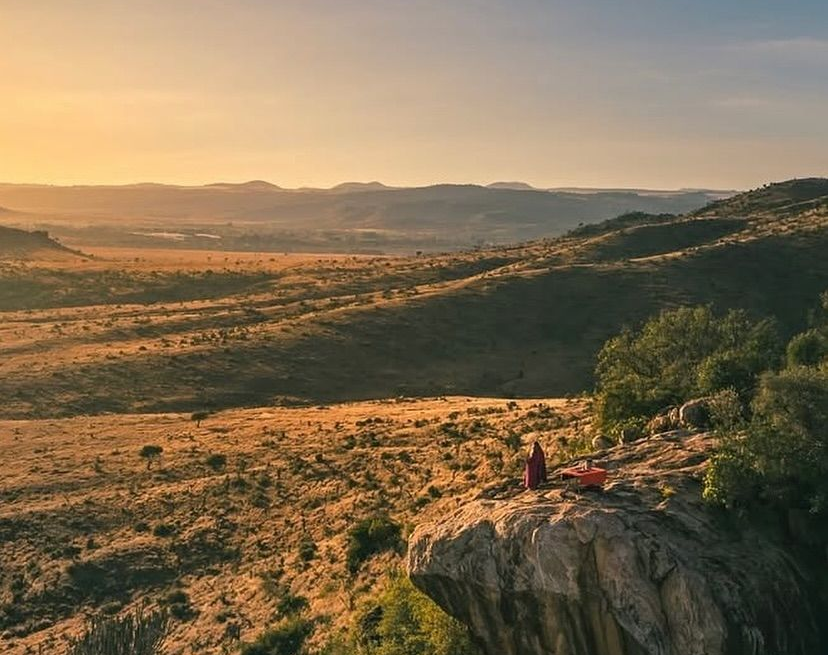
Enjoolata sits within Basecamp Masai Mara, a Gold Eco-Rated tented camp built along the northern banks of the Talek River — the river that forms a natural boundary with the Maasai Mara National Reserve itself. The setting alone is worth the visit: dense riverine forest, the call of more than 300 recorded bird species drifting through camp each morning, and the reserve close enough that a private footbridge leads directly into it.
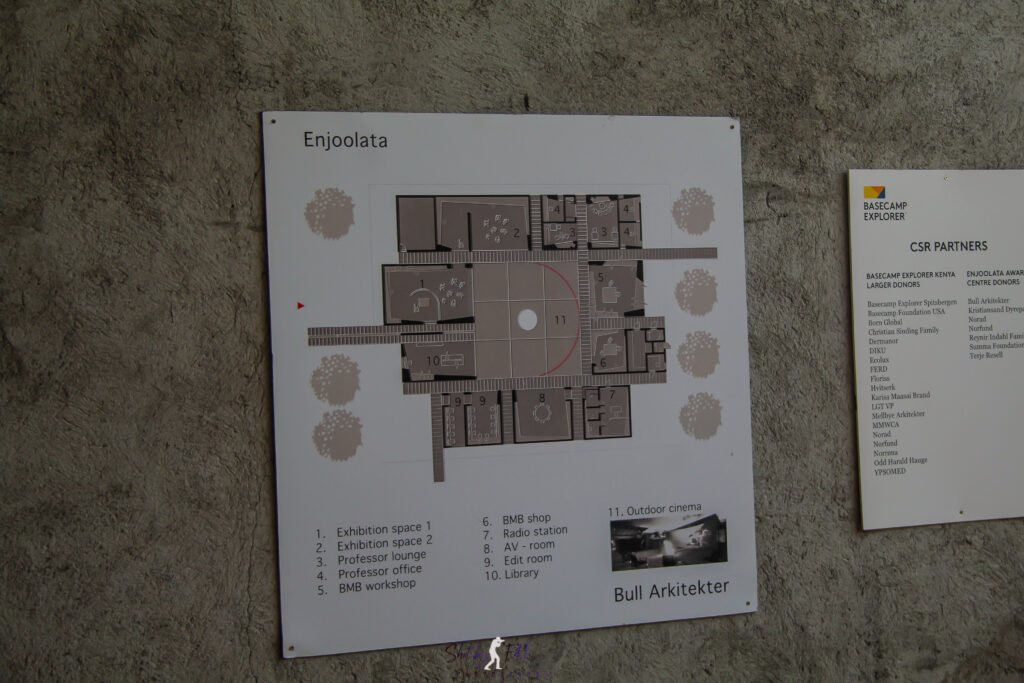
The centre is just a short walk from Talek village and barely minutes from Talek Gate, one of the main entry points into the Maasai Mara National Reserve. This puts Enjoolata within easy reach of several of the Mara’s most celebrated conservancies, including the Naboisho and Olare Motorogi conservancies, making it a natural stop whether you are based at Basecamp itself or staying nearby.
Getting there from Nairobi is straightforward by either road or air. By road, it is roughly a 5 to 6-hour drive (around 225 to 275 km) from Nairobi to the Mara’s eastern gates, including Talek — tarred most of the way, with the final stretch on gravel road. Most travellers, however, opt to fly: scheduled flights depart daily from Nairobi’s Wilson Airport, landing about an hour later at one of the Mara’s airstrips. The nearest options to Basecamp are Ol Kiombo Airstrip, just north of the Talek River, or Keekorok Airstrip, roughly 21 km away, both followed by a short game-drive-style transfer straight into camp.
The Meaning Behind “Enjoolata”
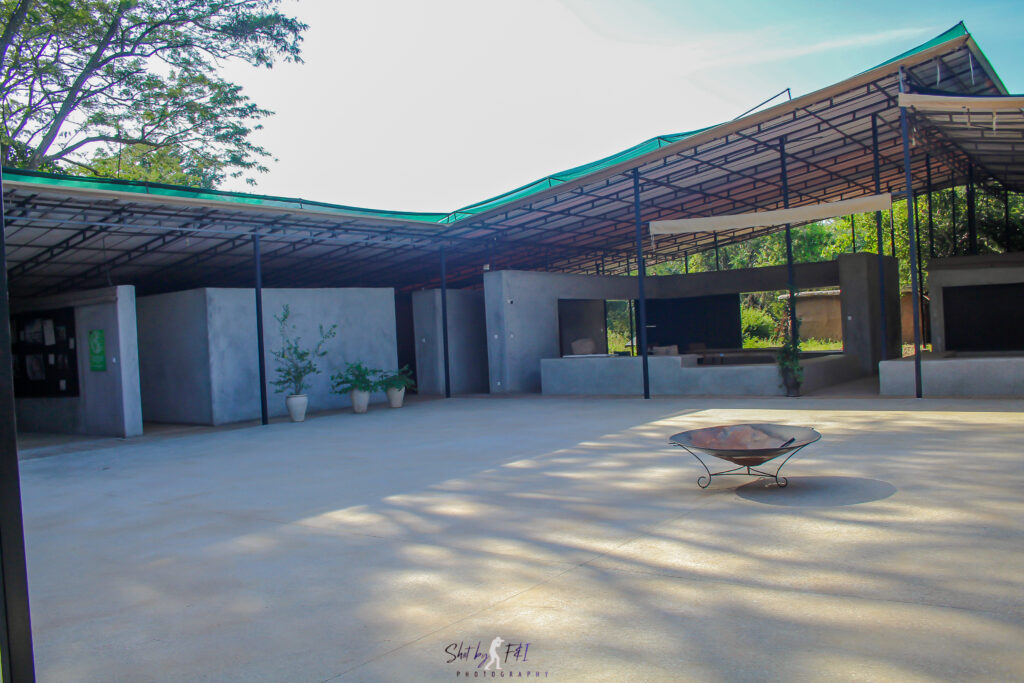
Names carry weight in Maasai culture, and Enjoolata is no exception. In the Maa language, “Enjoolata” describes the particular joy felt when something hidden becomes known — the spark of discovery, the satisfaction of understanding something that was previously out of reach.
It is a fitting name for what the centre actually does. So much of Maasai culture remains invisible to the average safari visitor, glimpsed only fleetingly through a beaded necklace at a curio stall or a brief cultural village stop. Enjoolata was built to change that — to create what its founders call “Enjoolata moments,” instances of genuine discovery where a visitor leaves understanding something true and previously hidden about Maasai life, values, or worldview. The name itself reflects a core Maasai value: that knowledge and connection between people — Maasai and visitor alike — are worth actively creating, not leaving to chance.
A Journey Through Maasai Culture
Step inside Enjoolata and the Mara’s human history opens up around you. The exhibition halls display ceremonial pieces worn by Maasai men and women alike — beaded collars, woven belts, ornate headdresses — each item passed down through generations and carrying a story specific to the family or age-set that once wore it. You will see traditional tools used for everything from herding livestock to building the iconic manyatta homesteads, alongside displays explaining the deep, almost sacred relationship between the Maasai and their cattle, which has shaped everything from diet to social structure to measures of wealth.
The Maasai social world is organised around an intricate age-set system, in which boys move through defined life stages — from junior warrior (moran) to senior elder — each with distinct responsibilities and rites of passage. Guides at Enjoolata are often happy to explain how this system still shapes community decision-making and identity today, alongside the oral traditions, storytelling, and songs that have carried Maasai history forward for centuries in the absence of a written language.
You will also learn about traditional medicine — the herbal knowledge that Maasai elders have refined over generations to treat everything from fevers to wounds — and the communal rhythms of daily life: the division of labour between men and women, the construction of homes from a careful blend of mud, sticks, grass, and cow dung, and the ceremonies that mark major life transitions, from naming rituals to warriorhood to marriage. None of this is presented as a museum piece frozen in time. The Maasai community around Basecamp lives these traditions today, even as they navigate a rapidly modernising Kenya — and that tension, honestly discussed, is part of what makes a visit to Enjoolata so compelling.
Interactive Experiences
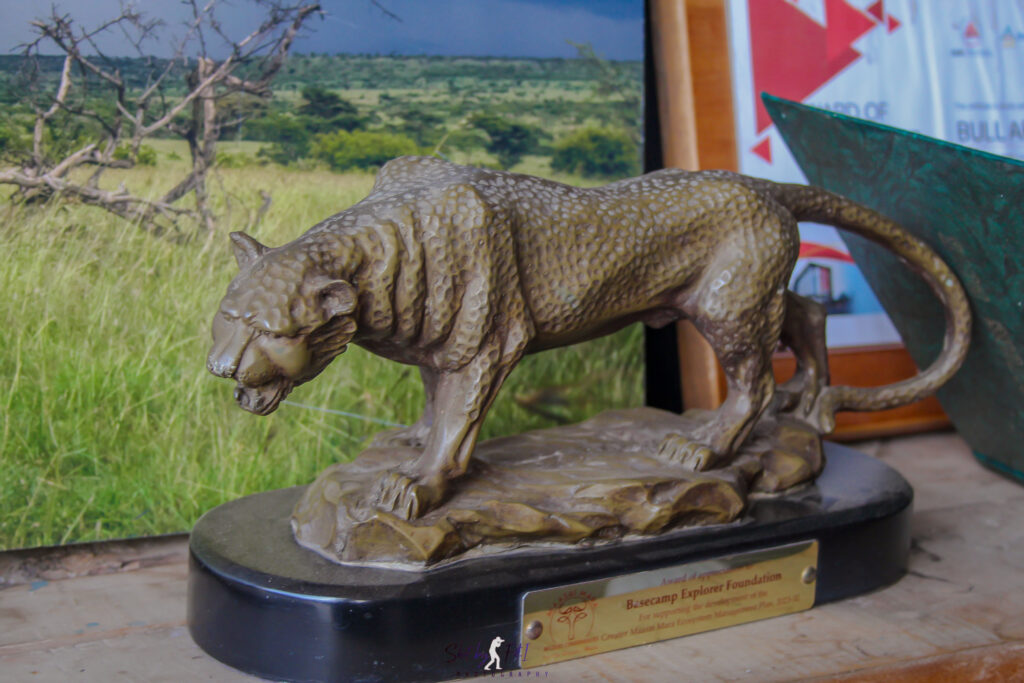
What sets Enjoolata apart from a typical cultural village stop is its emphasis on participation rather than observation. This is not a performance staged for cameras — it is an invitation to actually engage.
Inside the centre’s dedicated arts and crafts section, visitors can sit alongside the Maasai women artisans known affectionately as “mamas” and try their hand at traditional beadwork, learning the patience and precision behind designs that have been refined over centuries. The centre also features a video editing room and photography training space, where guests interested in honing their craft can receive guidance from experienced photographers on capturing — and editing — better safari and portrait images.
Depending on the day and season, visitors might also have the opportunity to enjoy traditional Maasai songs and dance, hear stories passed down through oral tradition, watch cooking demonstrations using locally grown ingredients from Basecamp’s organic garden, or pick up a few words of Maa from their guide. Guided cultural walks into Talek village extend the experience further, offering the chance to visit the local school, learn about the realities of the local economy, and meet the artisans behind the products sold in Enjoolata’s retail shop.
Maasai Women’s Empowerment
If there is a single thread running through everything at Enjoolata, it is the empowerment of Maasai women. The Basecamp Maasai Brand (BMB), the fair-trade-certified handicraft initiative housed within the centre, has grown over the years into a meaningful source of income for women from the surrounding community — many of whom previously had limited access to independent earnings.
With Enjoolata’s purpose-built workspace, BMB artisans now have proper studio space, storage facilities, and a retail outlet to sell their finished collections — beaded jewellery, leather goods, and accessories — directly to visitors. The centuries-old craft of Maasai beading, historically passed from mother to daughter, is preserved and given new economic relevance in the process.
The impact extends well beyond the individual artisan. Income earned through BMB has helped local women support their households and send their children to school, while broader Basecamp Explorer Foundation initiatives — including a major water project now supplying clean drinking water to close to 2,000 local families — demonstrate how tourism revenue, channelled deliberately, can ripple outward into genuine community development. This is community-based tourism in its most concrete form: not a marketing phrase, but women earning a livelihood from skills they already possessed, on terms that respect and sustain their culture.
Sustainability and Responsible Tourism
Enjoolata was never conceived as a standalone cultural attraction — it is one piece of a broader sustainability philosophy that has defined Basecamp Explorer’s operations in the Mara for more than two decades. The camp holds a Gold eco-rating from Ecotourism Kenya, and its environmental commitments include an active tree-planting programme that has helped restore the Talek riverine forest and made operations carbon positive, alongside structured waste collection and recycling programmes extended to benefit the surrounding community.
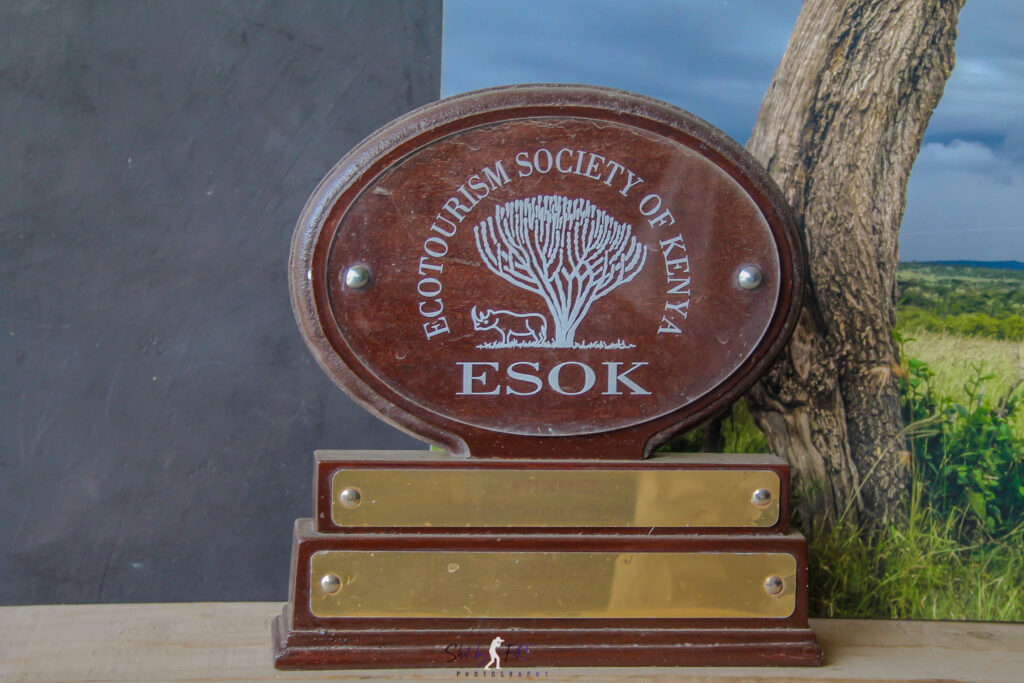
Crucially, the model is built on community-based tourism: a portion of guest fees support both Enjoolata’s operations and broader Basecamp Explorer Foundation projects, while access to the centre’s facilities is offered free of charge to local Maasai communities, subsidised by guests who choose to support it. This is low-impact, ethical travel in practice — tourism that channels resources back into conservation, education, and community welfare rather than extracting value and moving on. For eco-conscious travellers searching for sustainable tourism in Kenya that delivers more than a feel-good label, Enjoolata is a genuine example of the model working as intended.
Why Every Safari Should Include a Cultural Experience
Game drives will always be the headline act of a Maasai Mara safari, and rightly so — there is nothing quite like watching a pride of lions at dawn or witnessing the Great Migration thunder across the plains. But wildlife viewing alone tells only half the story of this landscape.
The Maasai people have coexisted with the wildlife of the Mara for centuries, developing a relationship with this ecosystem that is fundamentally different from the tourist’s brief, vehicle-bound encounter. Understanding that relationship — how Maasai communities manage livestock alongside wild predators, how conservancies have been shaped by community land decisions, how culture and conservation are inseparably linked here — transforms a safari from a wildlife-spotting exercise into something far richer: a genuine encounter with a place and its people. A cultural visit to Enjoolata does not compete with your game drives. It completes them.
Photography Opportunities
For photographers, Enjoolata offers a different kind of subject matter than the savannah — and arguably a more intimate one. The centre’s architecture, with its thatched roofs and locally sourced materials set against the riverine forest, provides striking compositional backdrops, while the exhibition halls offer close-up opportunities to photograph ceremonial attire, intricate beadwork, and traditional tools in detail.
Portrait photography here carries particular weight: the weathered hands of a beading “mama” mid-craft, the vivid reds and blues of traditional Maasai dress, the concentration on a craftsperson’s face. Always ask permission before photographing individuals — it is both respectful and, almost always, warmly received once trust is established. The golden hour light along the Talek River at sunrise and sunset adds a cinematic quality to landscape shots, while cultural performances, when scheduled, offer dynamic, movement-rich photography opportunities rarely available elsewhere on a standard safari.
Best Time to Visit
Enjoolata Centre is open year-round, and because its experiences are largely indoor and community-based, it is far less weather-dependent than a typical game drive. That said, timing your visit around the Mara’s broader seasonal rhythms can shape your overall trip.

The dry season (roughly July to October) coincides with the Great Wildebeest Migration and offers the most reliable weather, easiest road access, and classic golden-light photography conditions — making it the most popular time to combine wildlife viewing with a cultural visit. The green season (November to June), while wetter, transforms the landscape into a lush, vivid backdrop, with fewer crowds at both the reserve and the centre, and excellent value for travellers willing to embrace occasional rain. Whichever season you choose, a visit to Enjoolata typically takes two to three hours and pairs naturally with an early morning or late afternoon game drive on the same day.
Tips for Visitors
A little preparation goes a long way toward making your Enjoolata experience meaningful for both you and the community you are visiting.
Respect local customs and approach the centre with curiosity rather than spectacle in mind — this is a living culture, not a performance. Dress modestly, particularly if your visit includes a walk into Talek village or a local home. Always ask permission before taking photographs of individuals, even when it feels like an obvious shot; most Maasai are happy to be photographed when asked respectfully. Carry cash if you would like to purchase handicrafts directly from BMB artisans — buying directly supports the women who made the pieces. Allow enough time to actually sit, ask questions, and engage rather than rushing through; this is where the real “Enjoolata moments” happen. Travel with a knowledgeable guide, ideally Maasai themselves, who can translate not just language but context. And throughout, stay curious, stay open, and stay respectful — the depth of what you take away from Enjoolata will largely reflect the openness you bring to it.
A safari to the Maasai Mara is, for most travellers, a trip built around wildlife. But the Enjoolata Centre offers something that no game drive can: a direct, human connection to the community whose ancestral land you are walking through. Whether you are drawn by the beadwork, the oral histories, the photography, or simply the chance to sit and talk with the women whose hands have kept Maasai traditions alive across generations, a visit to Enjoolata adds a dimension to your Maasai Mara safari that lingers long after the lions have faded from memory.
At Munzat Safaris, we make it easy to experience this for yourself. When you travel with us, we book you into this eco-conscious accommodation right beside the Enjoolata Centre — so your wildlife adventure and your cultural discovery happen seamlessly, side by side. If you are planning your next trip to the Mara, let us build it around moments like these. This is one stop you won’t want to skip.