A Complete Guide to the Land of Crater Lakes, Ancient Elephants, and Misty Forests
Marsabit National Park
Marsabit National Park is tucked away in Kenya’s arid northern frontier, roughly 520 kilometers north of Nairobi, Marsabit National Park sits atop Mount Marsabit near Marsabit town in what was forwmerly Eastern Province. It’s one of Kenya’s most underrated safari destinations — a lush, misty island of forest rising dramatically out of the surrounding semi-desert, and a place that feels worlds away from the classic savannah safari.
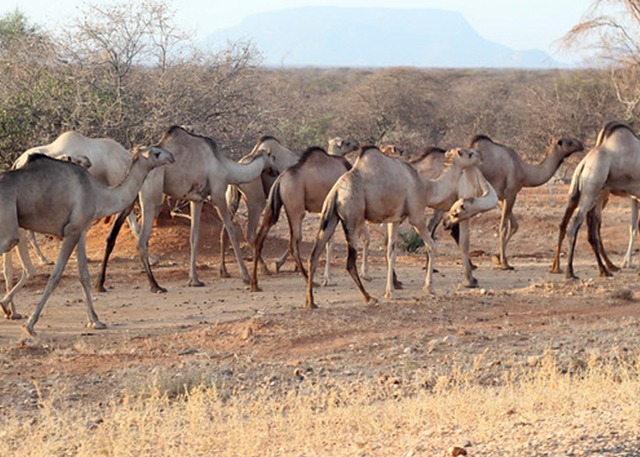
Most travelers heading to Kenya gravitate toward the well-worn circuit of the Masai Mara, Amboseli, and Lake Nakuru, and understandably so. But for those willing to venture further north, Marsabit offers a completely different kind of safari experience — one built around volcanic craters, cloud forest, ancient elephants, and a slower, quieter rhythm than the busier southern parks. This guide walks through everything you need to know before planning a trip: the landscape, the wildlife, how to get there, where to stay, and the best time to go.
How to Get to Marsabit National Park
Getting to Marsabit takes a bit more effort than most Kenyan parks, which is part of what keeps it so wonderfully uncrowded.
By road: From Nairobi, the standard route runs north through Nanyuki and Isiolo, covering a distance of roughly 570 kilometers. The tarmac A2 highway is paved most of the way, though the final stretch before Marsabit can still involve rougher sections, so a sturdy 4×4 vehicle is strongly recommended, especially outside the driest months. The drive itself is part of the adventure, often passing near Samburu country, crossing the Ewaso Nyiro River, and winding through dramatic semi-arid landscapes dotted with volcanic outcrops before climbing into the cool, forested slopes of Mount Marsabit. Depending on road conditions and stops along the way, the drive from Nairobi typically takes a full day.
By air: For travelers short on time, flying is a convenient alternative. There’s an airstrip in Marsabit town, only a few kilometers from the park’s main gate, with flight time from Nairobi at around two to two and a half hours.
Park gates: Marsabit is served by several entry points, including Ahmed Gate, Abdul Gate (which leads to the park headquarters and guesthouses), Ajmarko Gate, and Karare Gate.
A Mountain Oasis in the Desert
Marsabit National Park covers roughly 1,554 square kilometers and is dominated by Mount Marsabit, a massive extinct volcano rising to about 1,700 meters above sea level. Its slopes are cloaked in dense montane forest, kept cool and moist by frequent mist and rain — a striking contrast to the dry, scorched plains below. While the lower slopes of the mountain can appear scorched and dry, the richly forested scenery around them makes the park just as magical a sight to behold.
The Famous Crater Lakes
What truly sets Marsabit apart are its volcanic craters, known locally as “gofs,” a name used by the local Borana people. Scattered across the mountain, several of these craters cradle near-permanent lakes that draw wildlife from across the region. At the heart of the park lies an extinct volcano, and the height of the mountain creates its own microclimate — one that supports a large tract of indigenous forest fed by thick mist that rolls in overnight as warm desert air rises and cools, often lingering well into the late morning.
- Lake Paradise — the most scenic and famous of the three, located about 10 kilometers from Ahmed Gate. It sits inside “Gof Sokorte Guda,” a Borana phrase meaning “Big Sweet Water Crater,” and was named “Paradise” by American travelers Martin and Osa Johnson. It has even been featured in a number of films, and remains one of the most photographed spots in northern Kenya. The crater itself was formed by the interaction of underground water with rising magma, and its lake level shifts with the seasons — swelling after rains, receding in the dry months.
- Gof Sokorte Dika — a smaller but comparable lake nearby, known as the “Small Sweet Water Crater,” and a well-liked hangout for elephants and other wildlife. Together with Lake Paradise, it forms one of the best places in the park to reliably spot animals, since the surrounding forest is otherwise thick enough to easily conceal wildlife from view.
- Gof Bongole — the largest and steepest of the craters, with a dizzying 10-kilometer round rim, located on the drier southern footslopes of the park. It occasionally hosts its own crater lake, depending on rainfall.
- Gof Redo — a smaller extinct crater located a few kilometers north of Marsabit town, near the fork of the roads leading to Moyale and North Horr, worth a quick stop for those interested in the mountain’s volcanic history.
Game drives tend to be most productive in the late afternoon, when elephant and buffalo most often come down to drink at Gof Sokorte Dika and Guda.
Home to Legendary Elephants
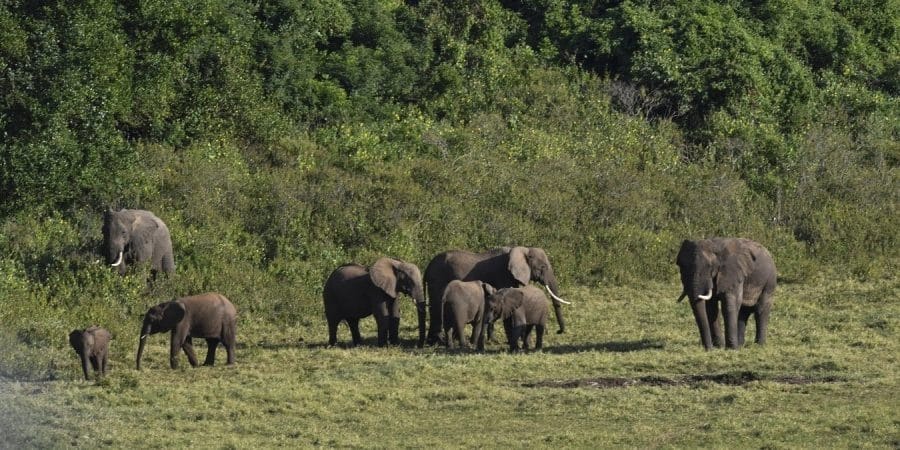
Marsabit’s reputation as an elephant sanctuary runs deep. The park is historically significant for protecting giant-tusked elephants, most famously the legendary bull Ahmed in the 1970s. Ahmed was so revered for his massive tusks and noble presence that he was placed under 24-hour presidential protection until his peaceful death at the age of 63. After his death, his remains and skeleton became a major attraction at the National Museum of Kenya in Nairobi, where visitors can still see the scale of his famous tusks today. Alongside Ahmed, another tusker named Abdul is also remembered for his impressive size, and both elephants remain part of local folklore around the park.
The tradition of protecting outsized tuskers continues to shape how the park is managed, and encountering elephants at one of the crater lakes — quietly drinking in the mist-covered forest — remains one of the most memorable wildlife experiences Marsabit has to offer.
Wildlife and Birdlife
Beyond its famous elephants, Marsabit is home to a genuinely diverse cast of wildlife. Forest-dwelling species include olive baboon, bushbuck, greater kudu, and a few secretive leopards, while lion, cheetah, reticulated giraffe, and Grevy’s zebra are found on the drier southern footslopes along with various dry-country antelope. Buffalo, hyena, Kirk’s dik-dik, and both greater and lesser kudu also call the park home, and the reserve is particularly noted for its zebra population.
Birders in particular will feel right at home. The park’s birdlife and reptiles are so diverse and rich that it’s essentially an ornithologist’s happy place, with species like Abyssinian ground hornbills, sunbirds, and a variety of waterfowl inhabiting the crater lakes. The sheer cliffs around some of the craters — reaching heights of over 200 meters in places — also provide nesting grounds for numerous species of eagle, hawk, and falcon, making Marsabit a genuinely rewarding stop for raptor enthusiasts as well as general bird lovers.
Unlike the open plains of the Mara or Amboseli, wildlife viewing in Marsabit has a different rhythm. Because so much of the park is thickly forested, animals aren’t always visible from the road the way they are on the savannah. Patience pays off here — settling in near one of the crater lakes in the late afternoon, when thirsty elephants and buffalo come down to drink, tends to be far more productive than a fast-paced game drive.
Culture and Community
Marsabit isn’t only about wildlife. The surrounding area is home to pastoralist communities including the Rendille, Samburu, and Borana people, whose traditions and sustainable grazing practices are woven into the region’s cultural landscape. A visit to the park’s famous singing wells — where herders draw water for their livestock while chanting traditional songs passed down through generations — is one of the most memorable cultural experiences in northern Kenya. These wells are more than a photo opportunity; they represent generations of knowledge about water management in one of Kenya’s harshest environments, and the rhythmic call-and-response songs used to coordinate the water-drawing process are a genuine window into daily pastoralist life.
Spending time in Marsabit town itself, before or after visiting the park, is also worthwhile. As a meeting point for several ethnic communities in Kenya’s north, the town has its own distinct character, markets, and pace of life that feels very different from Nairobi or the tourist hubs further south.
Where to Stay
Accommodation options around Marsabit range from budget to more comfortable mid-range stays, with far fewer choices than you’d find near the Mara or Amboseli — part of what keeps the area feeling untouched.
- Marsabit Lodge — the only lodge located inside the park itself, set in a striking location overlooking one of the crater lakes, where elephants and buffalo can often be seen coming down to drink in the late afternoon
- Ahmed Campsite — a public campsite near the main Ahmed Gate, a few kilometers from Marsabit Lodge
- Abdul Campsite — located near Abdul Gate, close to the park headquarters
- Special Paradise Campsite — a grassy clearing right on the shores of Lake Paradise itself, for travelers wanting to camp beside the park’s most famous crater lake
- Hotels and guesthouses in Marsabit town — including options such as Jirime Hotel and Resort, Sand and Rock Resort, Nomads Trail Hotel, Gof Hotel, and Chicho Hotel, offering budget to mid-range comfort just outside the park
It’s worth booking accommodation in advance, particularly during the peak dry-season months, since options in this remote part of Kenya are limited compared to the more established southern circuits.
Things to Do in Marsabit National Park
- Forest hikes through the misty, high-canopy montane forest
- Camel rides across the mountain trails
- Bird watching around the crater lakes
- Bush trekking and camping
- Visits to the singing wells, Lake Paradise, and Elephant Pool
- Rock climbing at the nearby Ol Olokwe massif, for the more adventurous (guide and equipment required)
Best Time to Visit
The best months for wildlife viewing are June to September and January to February, when animals congregate more predictably around the crater lakes to drink. In the wetter months, wildlife tends to roam more widely, sometimes beyond the park boundaries, and dense vegetation makes sightings harder — though these months can still reward keen birders. Broadly speaking, January through March tends to be hot and dry, April through June hot and wet, July through October very hot and dry, while November and December bring warmer, wetter conditions. Whatever the season, expect the mountain’s mist to roll in most mornings, giving the forest its distinctive, almost otherworldly atmosphere.
Practical Tips for Visiting Marsabit
- Vehicle: A 4×4 is strongly recommended, both for the drive up from Nairobi and for navigating the park’s own tracks, some of which can be rough or muddy depending on recent rainfall.
- Payment: Park fees at Marsabit are processed through Kenya’s eCitizen platform, payable via M-Pesa or card, so it’s worth sorting out entry payments in advance where possible.
- Pack for both heat and cold: Because the drive passes through hot, arid lowlands before climbing into a cool, misty mountain forest, packing layers is essential — light clothing for the journey, warmer layers for mornings and evenings on the mountain.
- Combine it with a wider northern Kenya itinerary: Given the distance and effort involved in reaching Marsabit, many travelers combine it with stops at Samburu National Reserve or other northern frontier destinations along the way, rather than visiting it as a single stand-alone trip.
- Guides matter: Because so much of the park is dense forest rather than open plain, a knowledgeable local guide significantly improves your chances of good wildlife sightings and safe hiking.
Frequently Asked Questions
How far is Marsabit National Park from Nairobi? Around 520–570 kilometers by road, depending on the exact route, typically a full day’s drive via Nanyuki and Isiolo. By air, it’s roughly two to two and a half hours from Nairobi.
Is Marsabit National Park good for a first-time Kenya safari? Not usually as a starting point. Marsabit is best suited to travelers who have already experienced Kenya’s more classic parks and are looking for something quieter, greener, and further off the beaten path.
What is Marsabit National Park known for? Its extinct volcanic crater lakes, dense montane cloud forest, rich birdlife, and its history as home to legendary giant-tusked elephants like Ahmed.
Can you camp inside Marsabit National Park? Yes — public campsites are available near Ahmed Gate, Abdul Gate, and on the shores of Lake Paradise itself.
Why Marsabit Deserves a Spot on Your Kenya Itinerary
Marsabit National Park offers something genuinely different from Kenya’s more famous safari circuits. It’s quieter, greener, and steeped in a kind of highland mystery you won’t find on the plains of the Mara or Amboseli. The combination of ancient volcanic craters, mist-shrouded forest, storied elephants, and living pastoralist traditions makes it a destination unlike anywhere else in the country.
For travelers who want to go beyond the classic safari route and experience Kenya’s remote northern frontier — its ancient volcanic craters, its legendary elephants, and its rich pastoralist culture — Marsabit is a destination worth the journey. Pair it with a wider northern Kenya itinerary, or treat it as a standalone escape into one of the country’s least-visited, most atmospheric corners — either way, it’s a side of Kenya few travelers ever get to see.