Great Migration Safaris
The greatest wildlife spectacle on Earth, experienced the Munzat way.
The Greatest Show on Earth
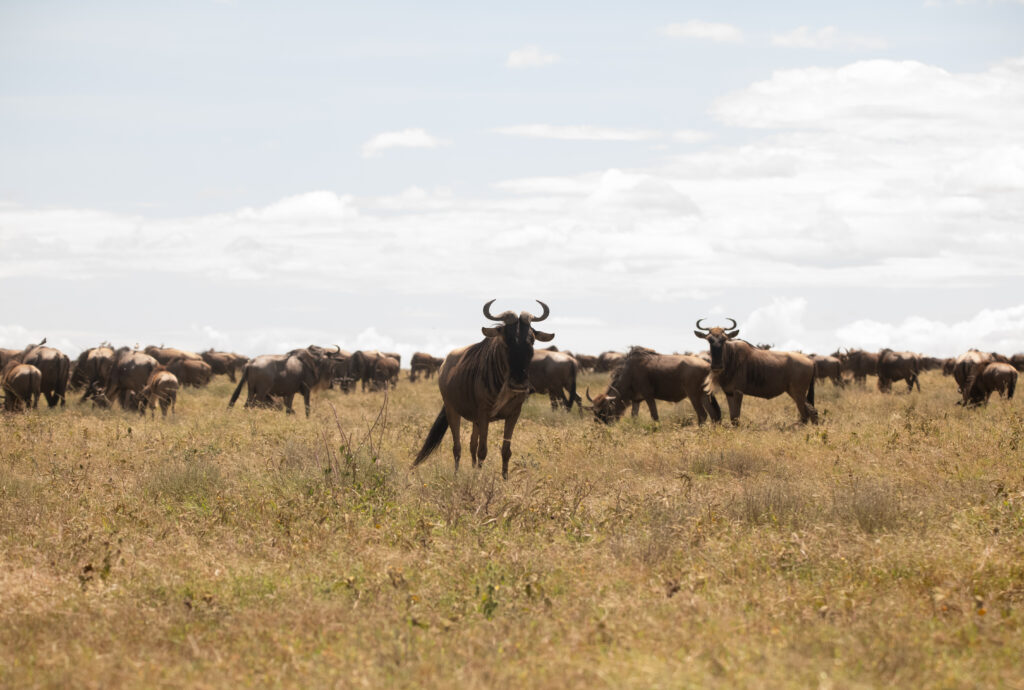
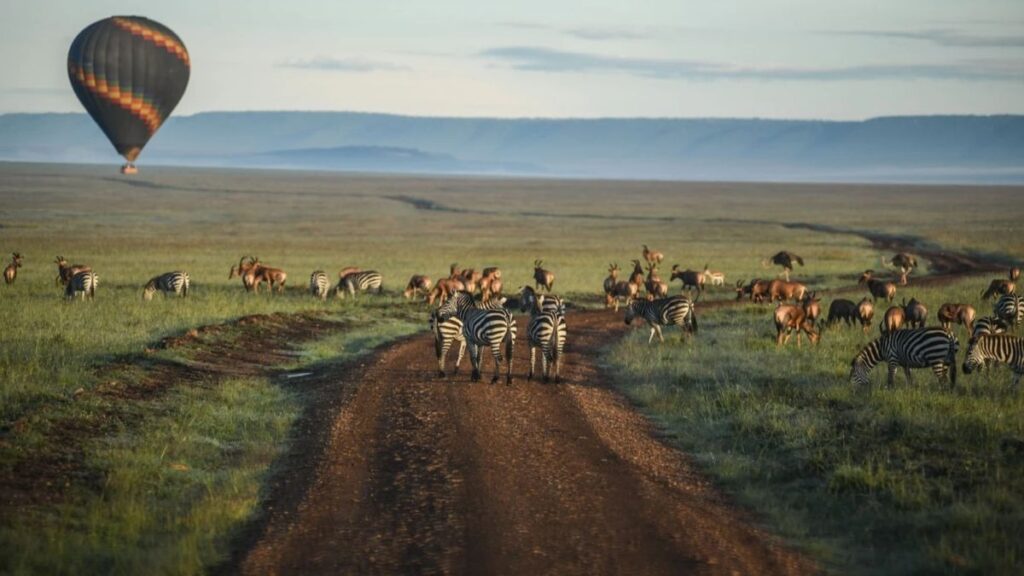
Every year, around 1.5 million wildebeest, joined by hundreds of thousands of zebra and gazelle, set out on a journey that has no beginning and no end. Guided by the rains and the promise of fresh grass, they travel in a vast clockwise circle between Tanzania’s Serengeti and Kenya’s Masai Mara, crossing rivers, outrunning predators and filling the horizon from edge to edge.
Witnessing it is humbling. The sound reaches you first: a low, restless rumble of grunting herds carried across the plains. Then the dust, then the sheer scale of it. At Munzat Safaris, we place you at the heart of this spectacle with private vehicles, expert guides and camps that make every sunrise feel like an occasion.
The Migration at a Glance
- The animals: Roughly 1.5 million wildebeest, 200,000 zebra and hundreds of thousands of gazelle
- The distance: Up to 800 km each year, in a continuous loop
- The regions: Southern and central Serengeti, western corridor, northern Serengeti and Kenya’s Masai Mara
- The stars of the show: Lions, cheetahs, leopards, hyenas and enormous Nile crocodiles
- Best for: Photographers, first-time safari-goers, honeymooners, families with older children and anyone chasing a bucket-list moment
When to Go: A Season-by-Season Guide
The Migration is a living journey rather than a single event, so the right time to travel depends on what you hope to see. We design every itinerary around the herds’ movements, and we’ll tell you honestly what to expect each month.
January to March: Calving Season (Southern Serengeti and Ndutu)
The herds gather on the short-grass plains of the southern Serengeti and the Ndutu region. In just a few weeks, hundreds of thousands of calves are born, often within minutes of one another. Where there are newborns, there are predators, and this is some of the most dramatic big-cat viewing of the year, with lions, cheetahs and hyenas hunting across open country.
Best for: Predator action, newborn wildlife, photography, and lush green landscapes
Good to know: Rooftop-to-horizon views, fewer crowds than the crossing season, and excellent value
April to May: The Long Rains and the Move North (Central Serengeti)
As the rains arrive, the herds begin their trek northwest through the central Serengeti. The landscape is lush, dramatic skies roll in, and the parks are at their quietest. Showers are mostly short, and the light is glorious for photography.
Best for: Solitude, rich scenery, lower rates and a quieter, more intimate safari
Good to know: Some camps close or offer special rates; we’ll guide you to the best open properties
June to July: The Western Corridor and the Grumeti River
The herds stream through the western Serengeti, meeting the Grumeti River, where large crocodiles lie in wait. The crossings here are less crowded than those farther north, and the rutting season brings extra energy to the plains. By late July, the first herds begin to reach the northern Serengeti.
Best for: Dramatic river action in a quieter setting, and guests who prefer to avoid peak crowds
Good to know: Crossing timing is less predictable here, so flexible planning pays off
July to October: The Mara River Crossings (Northern Serengeti and Masai Mara)
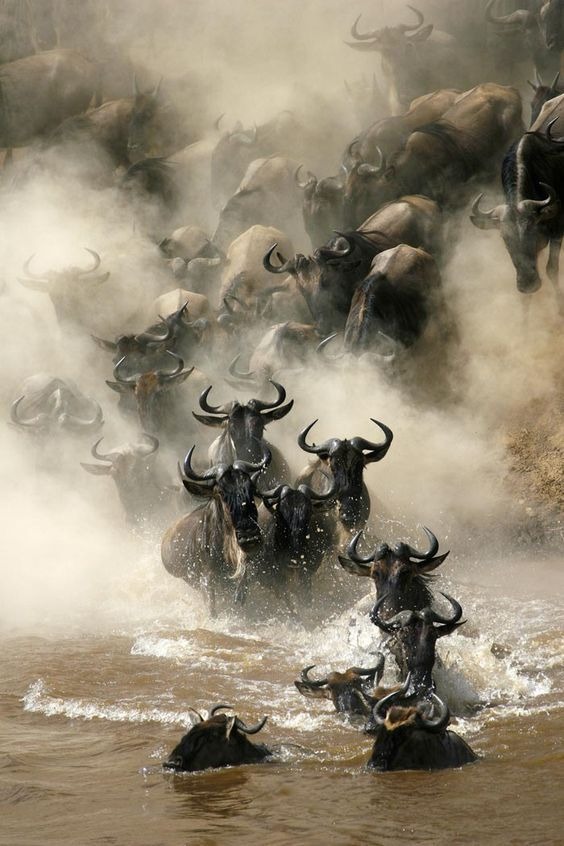
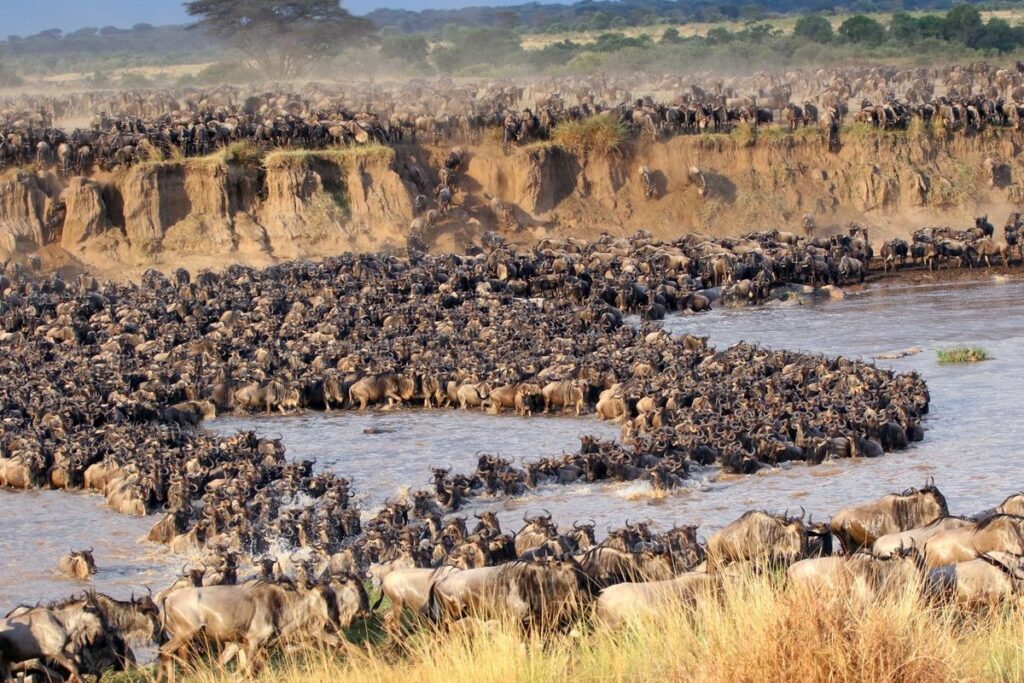
This is the season of the legendary crossings. Herds mass on the riverbank, hesitate, then surge into the water in a thunderous rush, with crocodiles waiting below. It is raw, emotional and utterly unforgettable. The herds move back and forth across the Mara River between Tanzania and Kenya, so there are many chances to witness a crossing.
Best for: The classic Migration moment, big-cat sightings and a true bucket-list safari
Good to know: Peak demand, so the best camps sell out many months ahead. We recommend booking 9 to 12 months in advance.
November to December: The Return South
The short rains arrive and the herds drift back through the eastern Serengeti toward the southern plains. The crowds have gone, the light is soft and golden, and the grass begins to turn green again. It is a gentle, beautiful time to visit.
Best for: Peaceful game viewing, excellent value and landscapes at their most photogenic
Good to know: A good moment to combine the Serengeti with a beach stay on the coast
Please note: The herds follow the rains, which vary from year to year. Our guides track their movements closely and will adjust your itinerary where needed to keep you close to the action.
Serengeti or Masai Mara?
Many guests ask us where to go. The truth is that both are extraordinary, and the best answer depends on your dates and your style of travel.
Tanzania’s Serengeti is vast, wild and endlessly open. The herds are present for most of the year, so it suits travellers who want flexibility in timing. It is also the place to see calving season. Camps range from intimate tented retreats to contemporary lodges, and several mobile camps move with the herds.
Kenya’s Masai Mara is the home of the legendary river crossings and some of Africa’s densest populations of big cats. The surrounding private conservancies offer exclusive access, fewer vehicles, walking safaris and night drives, in addition to the national reserve itself.
Both together is how we often recommend experiencing the Migration. By combining the Serengeti and Masai Mara, you maximise your chances of seeing the herds at their best, and you experience two distinct landscapes and safari cultures in a single journey.
Lorem ipsum dolor sit amet, consectetur adipiscing elit. Ut elit tellus, luctus nec ullamcorper mattis, pulvinar dapibus leo.
Experiences That Elevate the Migration
The Migration is spectacular on its own. These touches turn it into a journey that feels entirely yours.
- Sunrise hot-air balloon flights. Float silently over the plains as the herds stir below, then land to a champagne breakfast served in the bush.
- Private guides and vehicles. Move at your own pace, stay longer at the sightings that move you, and enjoy the freedom to follow your curiosity.
- Mobile and seasonal camps. Stay in intimate, luxurious camps positioned along the route, sometimes only a short drive from the herds.
- Private conservancy stays. In Kenya, enjoy exclusive game viewing with fewer vehicles, plus walking safaris, night drives and cultural visits.
- Photographic safaris. Work with guides experienced in photography, with vehicles set up for the best angles and light.
- Bush dinners and sundowners. Dine beneath the stars, with lanterns, a crackling fire and the sounds of the savannah around you.
- Cultural encounters. Spend time with Maasai communities and learn about the traditions and conservation efforts that protect this landscape.
Why Travel with Munzat Safaris?
- East African expertise. We live and work here, and our knowledge of Kenya, Tanzania, Rwanda and Uganda comes from experience rather than brochures.
- Truly tailor-made. No fixed packages and no crowded group departures. Every itinerary is built around you.
- Handpicked camps and lodges. We choose each property for its location, service and character.
- Real-time insight. We track herd movements throughout the season and adjust your plans for the best chance of seeing the action.
- Seamless planning. Flights, transfers, permits and logistics are managed from start to finish, so you can simply arrive and enjoy.
Lorem ipsum dolor sit amet, consectetur adipiscing elit. Ut elit tellus, luctus nec ullamcorper mattis, pulvinar dapibus leo.